
Initial harvest results confirm significant regional differences
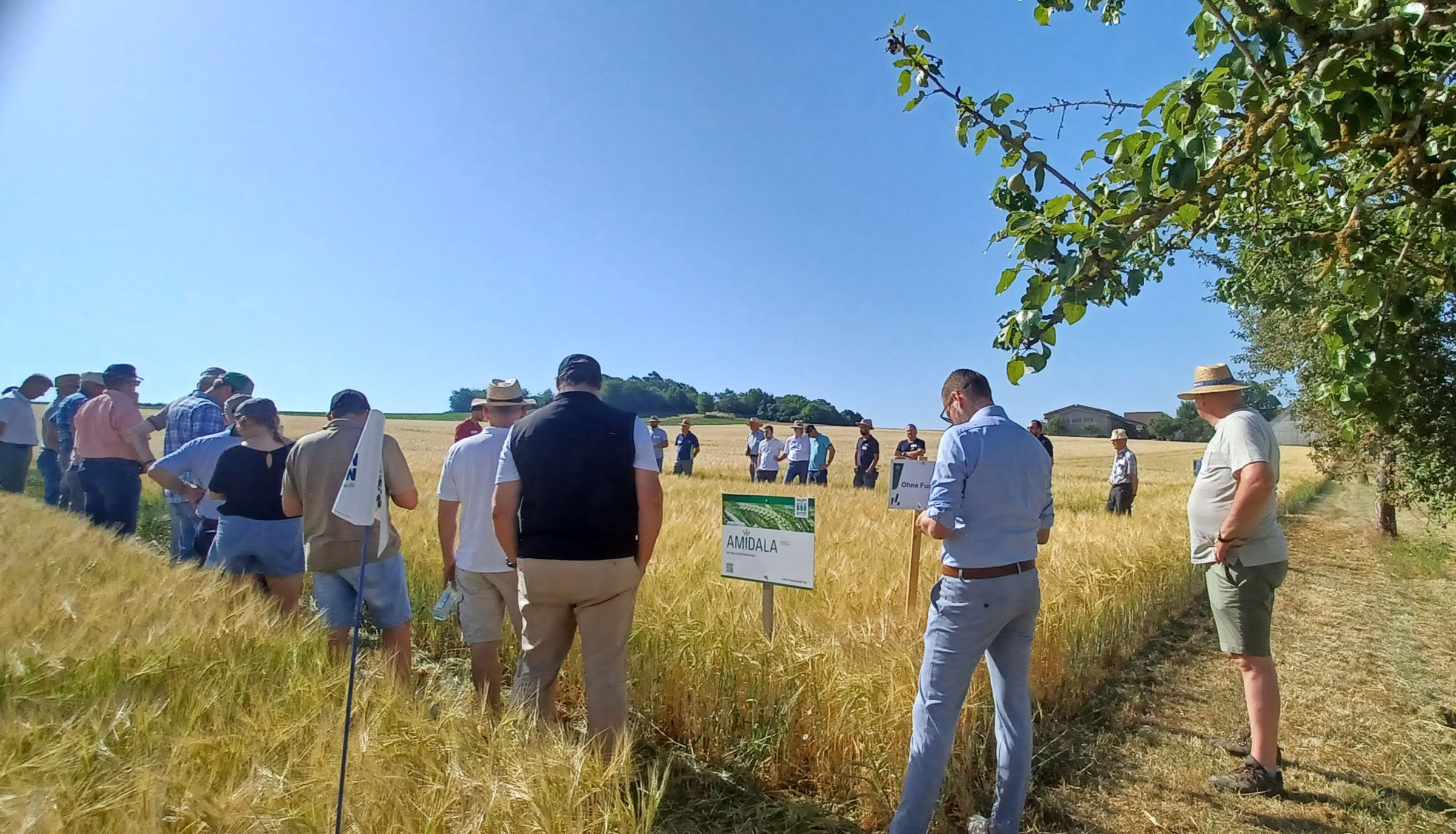
Over the past few weeks, pre-harvest malting barley field tours and informational events have taken place across Germany. The malting barley support associations, as well as the state agricultural agencies and chambers of agriculture, regularly issue harvest forecasts as part of these events. These forecasts suggest a slightly below-average malting barley harvest for Germany; at the same time, they predict predominantly good quality with slightly higher protein levels.
The malting barley harvest in Germany is yielding initial reliable results from the most important growing regions, which have been reported by the state promotion associations to the Braugersten-Gemeinschaft e.V.:
Initial results for winter malting barley are available from Rhineland-Pfalz. The areas harvested so far are yielding around 6.5 t/ha. With an average protein content of 10% and a whole-grain percentage of 93%, both protein and sorting values are in the good-to-average range. Initial threshing results for winter malting barley are also being reported from Thuringia. Yields are at a satisfactory level, at around 80 dt/ha. Protein contents range between 9.5 and 10.5%, and the whole-grain percentages are predominantly above 90%, thus meeting the requirements of malting plants.
The situation is different in early-harvest areas for spring barley on light, gravelly soils, such as in the growing area south of Munich or the Lechfeld south of Augsburg. There, the plants have responded to the persistent water and nutrient shortages with reduced tillering and short ears. Yields in these areas are, in some cases, significantly below the long-term average. At the same time, grading is often very good. However, due to the lack of a dilution effect, high to very high protein contents (14%–16%) have been observed.
Reports from Lower Saxony indicate that the effects of the heatwave at the end of June cannot yet be conclusively assessed. Initially, concerns were raised about grading issues and low protein contents. The amount received so far partially confirm this trend: protein contents are very low, and the proportion of whole barley grains is at the lower end of the range. However, there is hope that batches harvested later and at full maturity will achieve higher protein contents.
Overall, the heat wave at the end of June is likely to have reduced yields, particularly for summer barley sown later. Nevertheless, a brewing barley harvest that is slightly below average overall, but of good quality, is still expected across Germany. Dr. Markus Herz of the Bavarian State Institute for Agriculture forecasts a harvest of about 320,000 metric tons of high-quality malting barley, including approximately 30,000 metric tons of winter malting barley in Bavaria. Average protein levels are expected, but yields and the proportion of whole grains are projected to be slightly below average.
The market also remains calm. A supply that is expected to be somewhat smaller is meeting with subdued demand. Reduced malting capacity and existing surpluses from last year’s harvest are currently keeping prices in check.
There is not yet sufficient data available to present the harvest forecast from the individual federal states in tabular form.
Source: Braugersten-Gemeinschaft e.V.